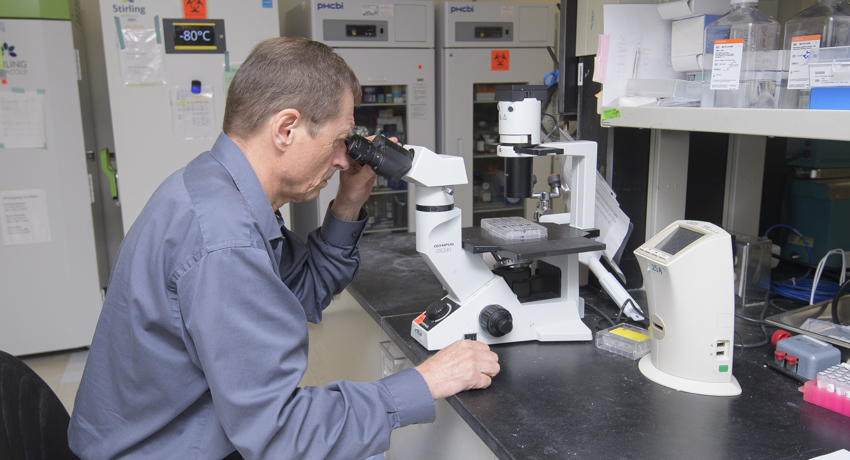
For Alexander Bukreyev, PhD, the promise of nucleic acid technology can be explained in surprisingly simple terms.
DNA and RNA carry instructions that tell cells what to do. Increasingly, scientists are learning how to use those instructions as medicine, replacing something that is missing, correcting or silencing something harmful, or directing cells to produce something therapeutic.
“Nucleic acid technologies have the potential to transform how we treat genetic diseases, cancer, autoimmune diseases, and infections,” he said.
Now, as director of the newly formed Center for Nucleic Acid Technologies at The University of Texas Medical Branch (UTMB), Bukreyev wants to help turn that potential into treatments while bringing together researchers and clinicians whose expertise might otherwise remain separated by traditional disciplines.
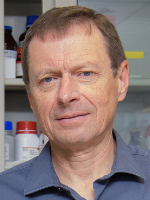 "I saw an opportunity to bring together expertise that already exists at UTMB and build something much larger than any individual laboratory could accomplish,” he said. “UTMB has extraordinary strength in infectious diseases and translational science, and oncology and gene therapy and immunotherapy are just starting to grow.”
His goal is for the center to connect those areas through shared technology platforms and create a path from identifying a medical problem to designing a nucleic acid therapeutic and, ultimately, moving it toward clinical use.
“My ambition is for UTMB to become nationally recognized as a place where nucleic acid medicines are not only discovered but translated into treatments,” Bukreyev said.
A culture built around collaboration
For Bukreyev, building the center is as much about people as technology.
He envisions researchers from a wide range of disciplines, including basic science, molecular biology, clinical care, and drug delivery, working together instead of in separate scientific silos.
“I want it to be a place where collaboration happens naturally and where people are encouraged to pursue ambitious ideas,” he said.
That includes creating an environment where a scientist studying RNA biology can easily work with experts developing delivery technologies such as nanoparticles, as well as researchers focused on cancer, infectious diseases, and patient care.
Bukreyev is particularly interested in what that environment could offer scientists early in their careers.
“Most importantly, I want young scientists to feel that this is a place where they can take intellectual risks, learn from people outside their own disciplines, and develop into independent scientific leaders,” he said. “This collaborative culture is central to how I envision the center operating.”
The center is still in its earliest stages. Discussions about creating such an initiative began roughly a year and a half before its approval, with initial consideration given to incorporating nucleic acid technology into an existing center. Ultimately, UTMB leadership decided it should stand on its own.
Bukreyev said the center can begin growing through faculty recruitment even as longer-term space needs are addressed. In its initial phase, new faculty members could remain housed within their academic departments while participating in the center’s scientific program.
His measure of success, however, extends well beyond establishing a center or recruiting researchers.
“I think success would mean that technologies invented at UTMB have progressed all the way from an idea in a laboratory to treatments being evaluated in patients,” he said.
He hopes to see several therapeutic platforms emerge, including RNA and DNA therapies, RNA delivery technologies, gene-editing approaches, cancer therapeutics, cancer vaccines, and therapies for infectious diseases.
"At that point, we would know that we had built not simply a research center but a lasting engine for therapeutic innovation,” Bukreyev said.
A curiosity that became a career
That vision grows out of a scientific career driven by a fascination with how living things work.
Biology was Bukreyev’s favorite subject in school, and viruses eventually captured his attention because of the outsized impact such tiny organisms can have.
“Viruses became especially intriguing because something so small and seemingly simple can have such a profound effect on complex organisms,” he said. “That curiosity eventually grew into a career in virology, and it still drives many of the questions I ask today.”
Bukreyev began the U.S. portion of his research career in 1995, first as a postdoctoral fellow and later as a staff scientist leading a small research group at the National Institute of Allergy and Infectious Diseases, where he spent 15 years. While there, he studied respiratory syncytial virus, or RSV, and began developing a vaccine against Ebola virus. That work ultimately brought him to Galveston.
In 2010, Bukreyev was recruited to the Galveston National Laboratory to continue studying highly pathogenic viruses. He brought his Ebola vaccine work with him and expanded his research to other aspects of Ebola and additional viruses.
Years later, viruses still hold his attention.
“Viruses are remarkably simple and remarkably sophisticated at the same time,” he said.
What has changed dramatically during his career is scientists’ ability to turn discoveries about fundamental biology into technologies with potential applications for patients.
“The distance between discovering a biological mechanism and imagining how it may help a patient has become shorter,” Bukreyev said.
Asking difficult questions
Bukreyev also has a scientist’s acceptance of something less glamorous: failure.
“If every experiment works exactly as suspected, we probably are not asking sufficiently difficult questions,” he said.
A negative result, he said, can reveal gaps in scientists’ understanding and sometimes prove more interesting than the original hypothesis.
“What keeps me going is curiosity, the possibility that the next experiment will reveal something we didn’t understand before,” he said. “Science requires persistence, but it also requires being willing to change direction when the evidence tells you to do that.”
Perhaps the most striking change Bukreyev has witnessed during his career is the evolution of nucleic acids from molecules scientists primarily studied into tools they can engineer.
Researchers can now design RNA molecules, control how long they function, direct them toward particular cells, regulate gene expression, and use them to reprogram cells. Technologies including mRNA, circular RNA, gene editing and engineered cell therapeutics would have seemed extraordinarily ambitious early in his career, he said.
“Today, the question increasingly is not whether these approaches are possible, but which medical problems we should tackle with them.”
That potential also comes with responsibility.
Scientists still face significant challenges in moving discoveries from the laboratory into patients safely and effectively. Among the biggest is delivery: getting the right nucleic acid to the right cells, in the right amount, and for the right length of time.
For Bukreyev, that challenge is coupled with another: determining where UTMB has the expertise and opportunity to lead rather than follow.
“This combination of scientific opportunity and urgency is both exciting and demanding,” he said.
And excitement, he noted, is not enough to sustain a scientific enterprise.
“You cannot build something based on excitement alone,” he said. “It takes discipline. You need to maintain productivity and do the work.”
That pragmatic approach may also sum up Bukreyev’s vision for the new center: ambitious in what it hopes to accomplish but grounded in the work required to get there.
The center will not be built around one disease or one technology. Instead, Bukreyev wants it to create capabilities that investigators across UTMB can use to address a wide range of medical problems, bringing together RNA biology, therapeutic design, targeted delivery, computational approaches, disease expertise, and clinical translation.
“Ultimately, I want the center to make possible things that individual laboratories working separately couldn’t accomplish,” he said.
And the vision may eventually extend beyond Galveston. Bukreyev said the center is the first of its kind in The University of Texas System and could ultimately provide opportunities for collaboration with other UT institutions.